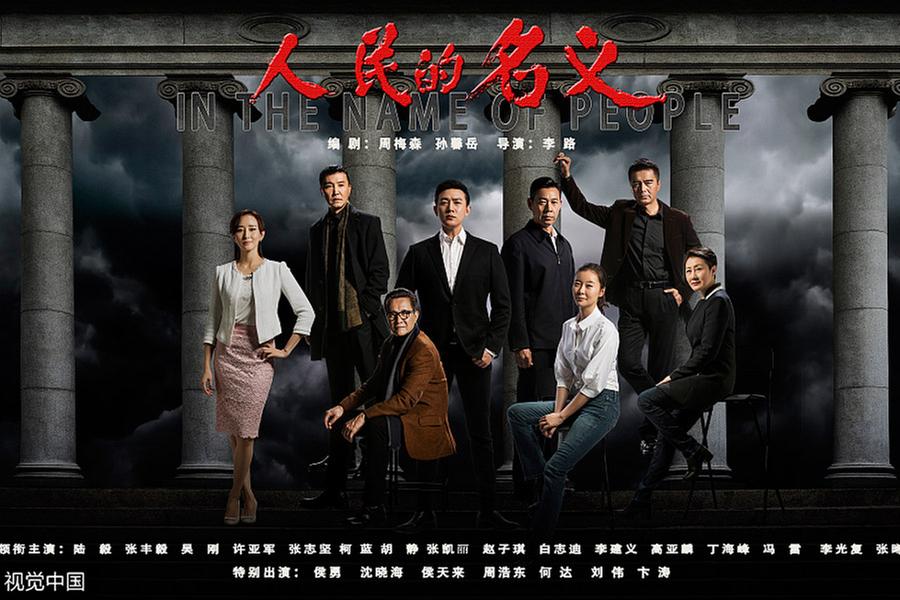
In the Name of People (TV Drama)
Overview
In the Name of People is a Chinese television drama series that made its debut on Hunan Satellite TV on March 28, 2017. The series quickly became a cultural phenomenon within China, attracting a vast audience and significant media attention. The series is known for its gripping narrative that delves into themes of corruption and justice within a fictional Chinese city. Set against the backdrop of the Chinese government's anti-corruption campaign, the drama resonated deeply with viewers and critics alike.
Plot
The storyline of In the Name of People centers on a law officer, Hou Liangping, portrayed by actor Lu Yi, as he embarks on a relentless quest to uncover and expose corruption within a city's power structures. His investigations lead him to confront a labyrinthine network of officials, each with their own secrets and agendas. As the plot unfolds, a complex web of deceit and betrayal emerges, challenging Hou's resolve and moral compass. The antagonist Qi Tongwei, played by Xu Yajun, serves as a formidable opponent, adding layers of tension and intrigue to the narrative.
Cast and Characters
The series boasts an impressive cast of seasoned actors, each delivering powerful performances that bring depth to their characters. In addition to Lu Yi and Xu Yajun, the series features:
Zhang Fengyi as Sha Ruijin, a key figure in the unfolding political drama.
Wu Gang as Li Dakang, whose portrayal of a complex official has garnered critical acclaim.
Hu Jing as Gao Xiaoqin, adding further complexity to the series' intricate character dynamics.
Zhang Kaili as Wu Huifen.
Zhao Ziqi as Zhong Xiaoai.
These characters, among others, navigate the treacherous waters of power and corruption, each driven by their own motivations and constraints.
Production and Funding
In the Name of People received substantial government backing, notably from the Supreme People's Procuratorate, the official body responsible for legal prosecution and investigation in China. This support not only highlights the series' alignment with national narratives but also underscores the government's interest in promoting anti-corruption themes through popular media. The series' production values reflect this backing, contributing to its broad appeal and high-quality presentation.
Source Material and Adaptation
The television series is adapted from a novel of the same name by Zhou Meisen, published in January 2016. The novel comprises 54 chapters, exploring themes of political intrigue and ethics, much like its television counterpart. The book quickly became a bestseller, topping charts on platforms such as Douban and major Chinese online bookstores like Dangdang and JD.com. The Kindle version has also seen significant sales on Amazon.cn, further emphasizing the story's widespread appeal.
Reception and Impact
Since its release, In the Name of People has been met with both critical acclaim and popular success, drawing high ratings on Chinese review sites such as Douban. The series has been likened to the Western political drama House of Cards by international observers, reflecting its sophisticated narrative and thematic depth. This comparison has helped the series attract attention from foreign media, including prestigious outlets such as the BBC.
The novel's success parallels that of the series, with readers eager to immerse themselves in the intricate tale of power and morality. The book's popularity has led to a surge in interest, with copies selling out rapidly across both physical and digital platforms. The story's resonance with contemporary societal issues, combined with its engaging presentation, has solidified its status as a cultural touchstone in modern Chinese media.
Cultural Significance
In the Name of People serves as a potent reflection of contemporary Chinese society's struggles with corruption and justice. Its release during a time of heightened governmental focus on anti-corruption measures adds layers of relevance and urgency to its narrative. The series not only entertains but also provokes critical thought and discussion, prompting audiences to reflect on the moral complexities of governance and accountability.
Its success has paved the way for more Chinese dramas to explore similar themes, contributing to a broader cultural discourse on integrity and responsibility. As such, In the Name of People stands as a landmark production in Chinese television, resonating far beyond its fictional confines to inspire dialogue and reflection on real-world issues of power and ethics. Article reference1. Hunan TV giant returns to comedy with 'Love Is Beautiful'. chinadaily.com.cn. 20212. 'Mr. Li Dakang' poses for fashion magazine. chinadaily.com.cn. 20173. Stills of 'In the Name of People' released. chinadaily.com.cn. 2017Photo Gallery(12 pictures)CategoriesArtsTagFilm and TVCatalogue1. Overview2. Plot3. Cast and Characters4. Production and Funding5. Source Material and Adaptation6. Reception and Impact7. Cultural Significance- - - []








